
The Signal-Revolution: A Deep Dive into modern Angular | Michael Hladky & Julian Jandl @ enterJS
About the event
Workshop – June 15, 2026, 10:00–17:00
Master Angular's Signal Revolution.
This deep-dive workshop covers everything from Angular's new reactive primitives—signal, computed, and effect—to the modern component APIs including input, output, model, and linkedSignal.
You'll explore practical, real-world patterns for state management, including the Resource API, and learn how Signals integrate seamlessly with existing RxJS codebases. We'll also take a first look at Signal Forms and understand why they represent a major step forward for form management in Angular.
A central focus of the workshop is gaining a deep understanding of Angular's change detection model: how Signals enable granular updates and what the future of zoneless performance looks like. Participants will leave with the knowledge and practical experience needed to build fast, modern, and scalable Angular applications.
Prerequisites
Participants should have practical experience with Angular and TypeScript.
You should feel comfortable creating components, working with services, and understanding dependency injection concepts. Basic knowledge of RxJS (such as Observables, subscribe, and pipe) is also recommended to fully understand the interoperability concepts covered in the workshop.
Learning Objectives
Participants will learn how to:
Use signal, computed, and effect confidently for component state management.
Build modern components using Angular's signal-based input, output, and model APIs.
Integrate Signals with RxJS using toSignal and toObservable.
Use the Resource API to manage asynchronous data, loading states, and error handling.
Explain how Signals transform Angular change detection and enable zoneless performance.
Apply modern Angular patterns to build maintainable and high-performance applications.
Agenda
1. Introduction to Signals
Understand what Signals are, why they matter, and gain hands-on experience with Angular's core reactive primitives:
signal() – writable state
computed() – derived state
effect() – side effects
2. Working with Signals: Best Practices
Learn the most important dos and don'ts for writing clean, maintainable, and performant signal-based code. Avoid common pitfalls such as circular dependencies and missing reactive dependencies.
3. Signal Inputs, Models, and Outputs
Master Angular's modern signal-based component APIs. We'll replace traditional decorators with input(), output(), and the powerful model() function for simpler and more robust two-way data binding.
4. Combining Signals and Observables
Signals do not replace RxJS—they complement it.
Learn how to bridge both reactive worlds using toSignal and toObservable, and discover practical integration patterns for real-world applications.
5. Resource & RxResource
Implement robust and reusable patterns for handling asynchronous data. We'll explore Angular's Resource APIs and learn how to elegantly manage loading, success, and error states.
6. Signal Forms
Get started with Signal Forms and discover how they change the way forms are built in Angular.
We'll compare Signal Forms with Template-Driven and Reactive Forms, learn validation strategies, and discuss migration approaches from existing form implementations.
7. Modern Angular Change Detection – Deep Dive
Understand the "why" behind Signals.
We'll look under the hood to explore how Signals transform Angular's change detection model, moving away from Zone.js toward granular, localized updates and highly performant zoneless applications.
Schedule
09:00 – Registration
10:00 – Workshop starts
11:30 – 11:45 – Coffee break
13:00 – 14:00 – Lunch break
15:30 – 15:45 – Coffee break
~17:00 – Workshop ends
Technical Requirements
Participants should bring:
Their own laptop
Access to the internet (Wi-Fi will be provided)
Required software:
Node.js v22.12.0
npm v10.2.4
If you are using a company-managed device, please verify in advance that none of the following issues apply:
Missing administrator permissions
Overly restrictive corporate security software
Corporate proxy configurations that may prevent package downloads or external access outside your company network
Get your ticket at enterjs.de
Meet the trainers

Michael Hladky
 Google Developer Expert
 Microsoft MVP
 Auth0
Auth0 Trainer
 Nx Champion

Julian Jandl
 Performance Expert
- Trainer
- Nx Champion
Keep exploring
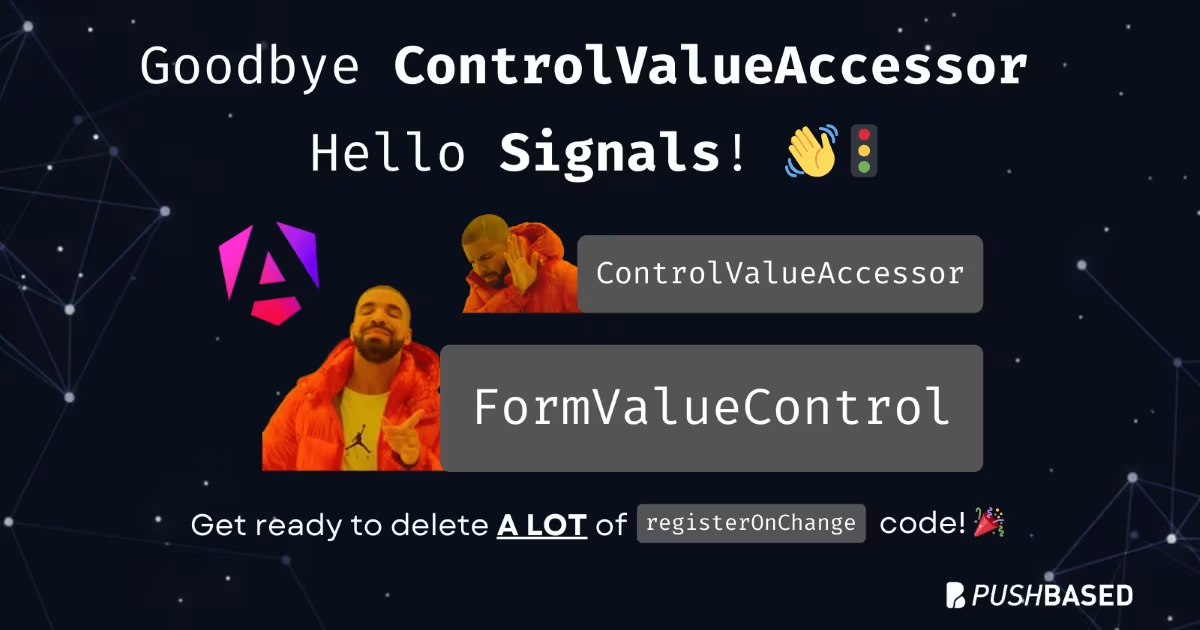
Goodbye 'ControlValueAccessor', Hello Signals! 👋🚦
Angular is bridging the gap between the new Signal-Forms architecture and the Template/Reactive Forms. This isn't just a minor update—it’s a fundamental shift in how we author custom form controls.


New Features for RxAngular - Native signal support & improved state configuration
The RxAngular team & community shipped great new features as well as quality of life improvements with the latest releases. In this blog post we'll dive into RxAngulars recently added new features, including the native support for signals.