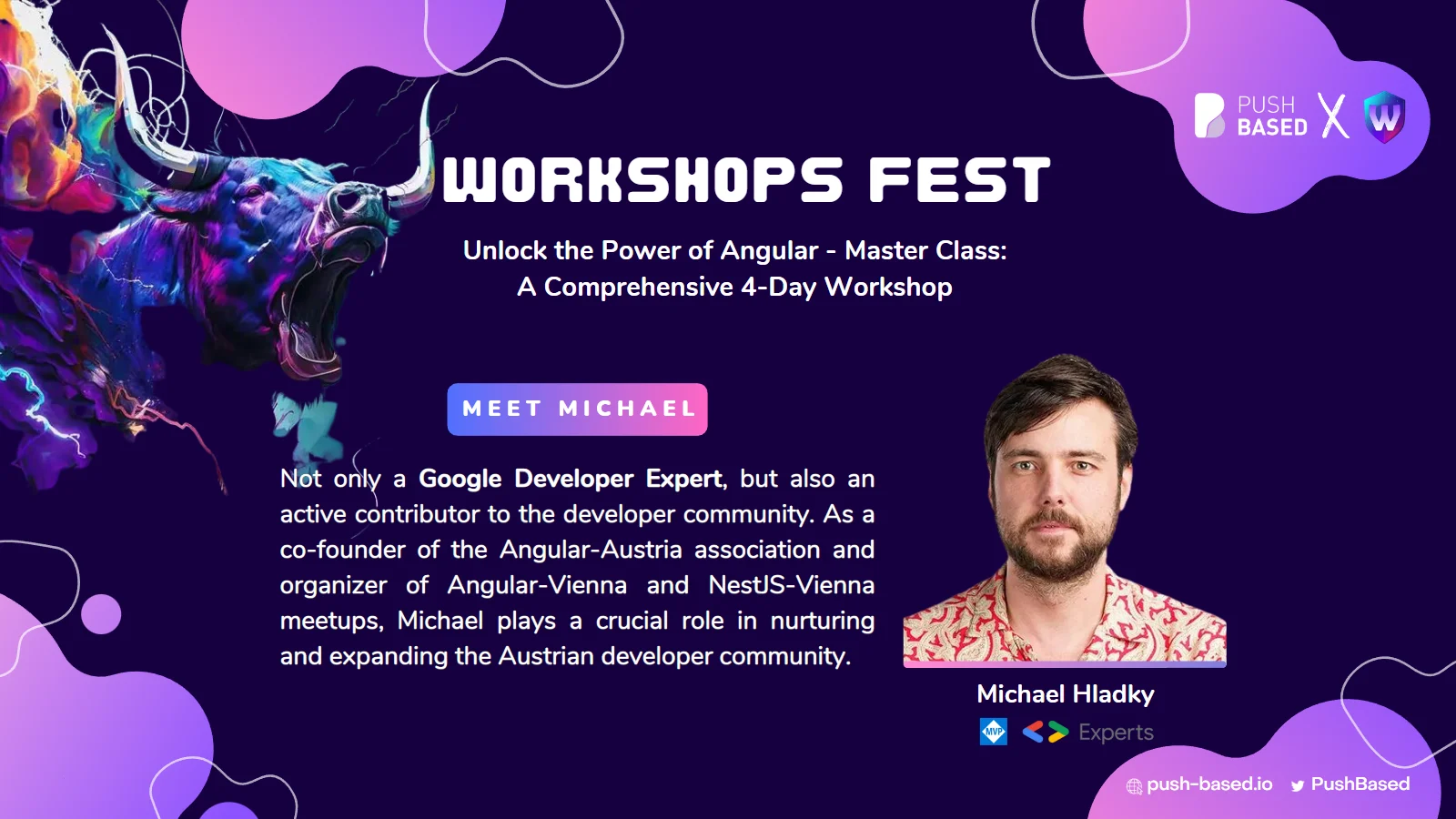
Modern Angular – Standalone APIs, Injectors, Signals
About the event
In this course, you will learn how to use standalone components to build more modular and scalable applications. You will also learn how to use the new inject function to inject dependencies directly into your components. We will also teach you how to use typed forms to ensure your forms are always properly validated.
Our Modern Angular course is designed for developers who are already familiar with Angular and want to learn the latest features and techniques for building modern applications. This course is taught by experienced Angular developers who have worked on some of the most complex Angular projects.
The course starts with an introduction to standalone components, which are a new feature in Angular 15. You will learn how to use standalone components to build more modular and scalable applications, and how to reuse them across multiple projects.Next, we will cover the new inject function, which allows you to inject dependencies directly into your components. This makes it easier to write cleaner and more maintainable code, and reduces the amount of boilerplate you need to write.
We will also cover typed forms, which are a new feature in Angular 15. With typed forms, you can ensure that your forms are always properly validated, reducing the risk of errors and making your code more robust. Next, we will cover the new provider functions and directive composition API, which allow you to create more powerful and reusable components. We will also cover signals and fine-grained reactivity, which are powerful features that allow you to write more efficient and scalable applications.
Finally, we will teach you the basics of Nx, which is a powerful tool for building scalable and maintainable Angular applications. You will learn how to use Nx to manage your projects, and how to use its powerful features to build better applications.
Meet the trainer

Michael Hladky
 Google Developer Expert
 Microsoft MVP
 Auth0
Auth0 Trainer
 Nx Champion