Talk
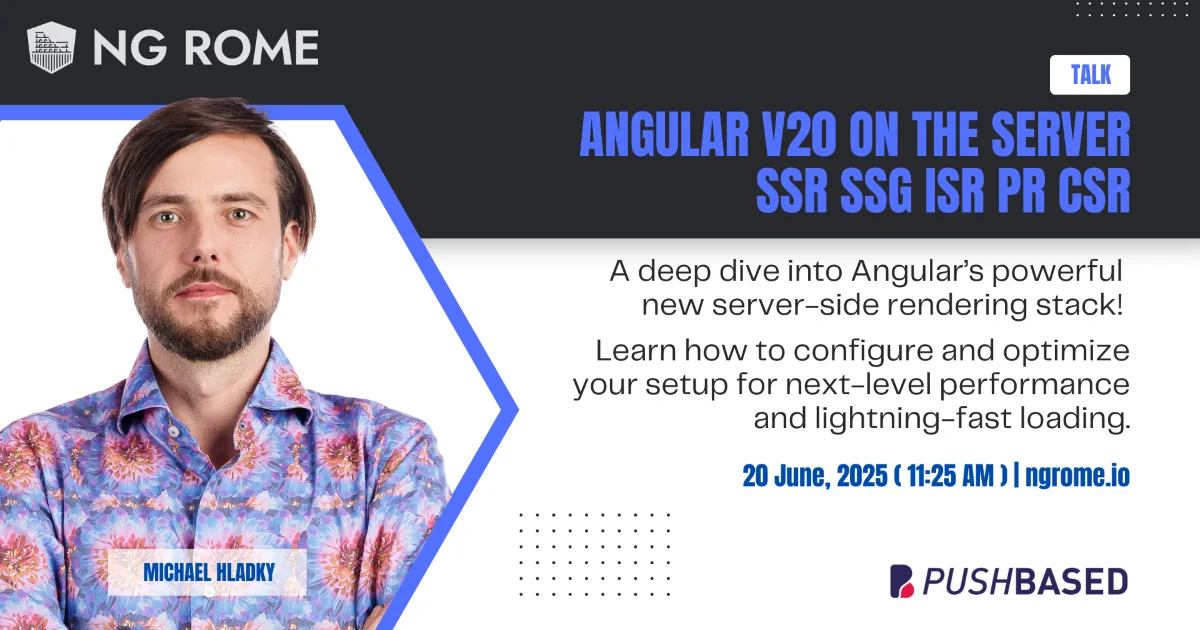
Angular v20 on the Server - SSR, SSG, ISR, PR, CSR
About the event
Join Michael for a deep dive into Angular’s game-changing server-side capabilities. Discover how SSR, SSG, ISR, and CSR integrate seamlessly with Angular’s new hydration features—highlighted by ngSkipHydration—to deliver unreached performance and a streamlined loading experience. Learn to configure and optimize your setup for the most advanced server-side rendering in the industry. Get a deep dive into all the latest features and understand your benefits. Let’s dive deep together.
Preview of the talk
Meet the speaker

Name
Michael Hladky
Perks
 Google Developer Expert
 Microsoft MVP
 Auth0
Auth0 Trainer
 Nx Champion
Keep exploring
Talk
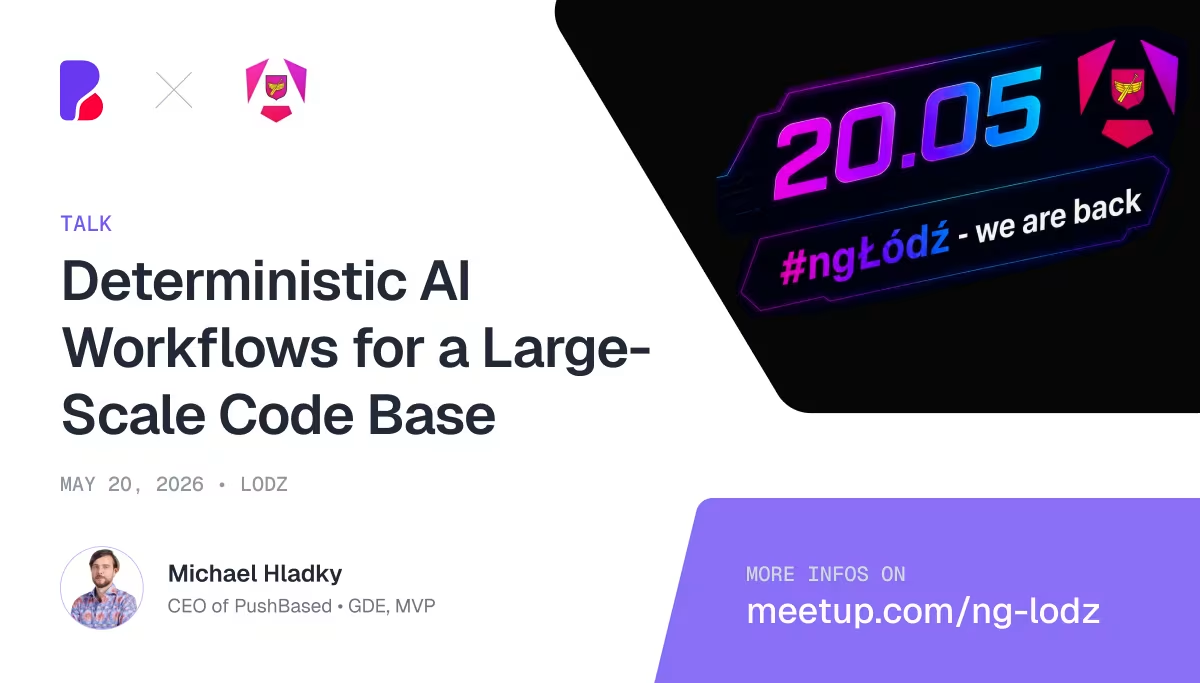
Deterministic AI Workflows for a Large-Scale Code Base | Michael Hladky @ ngLodz

ngLodz
May 20, 2026 · Lodz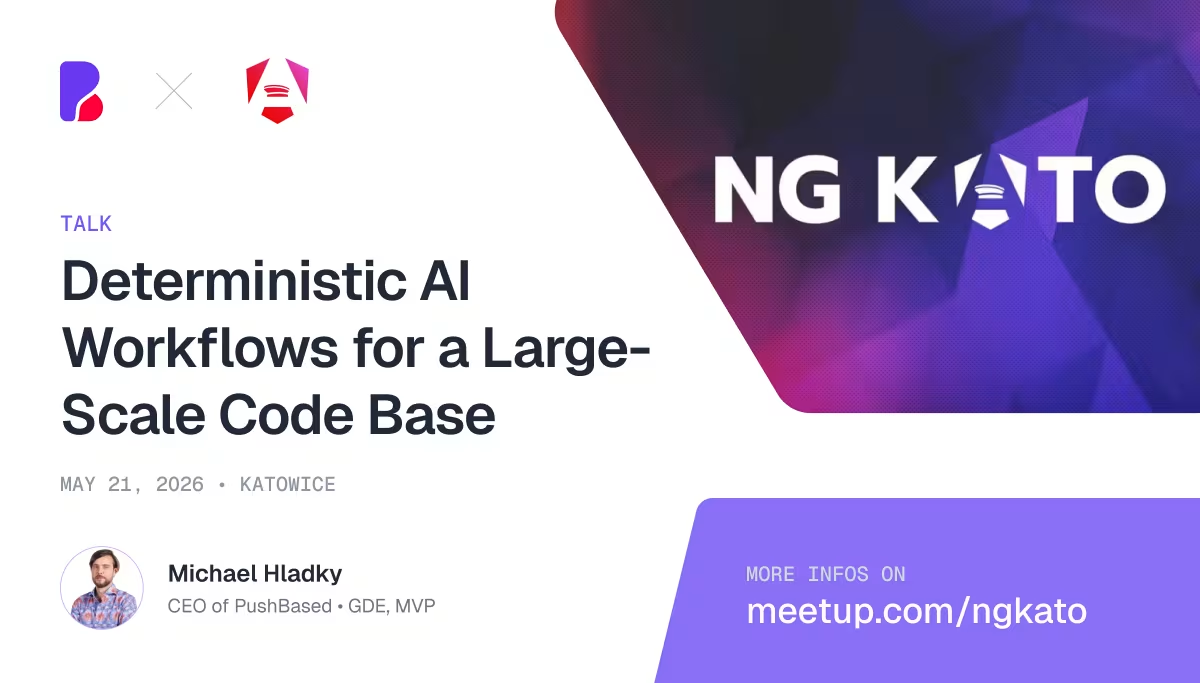
Talk
Deterministic AI Workflows for a Large-Scale Code Base | Michael Hladky @ ngKato

ngKato
May 21, 2026 · Katowice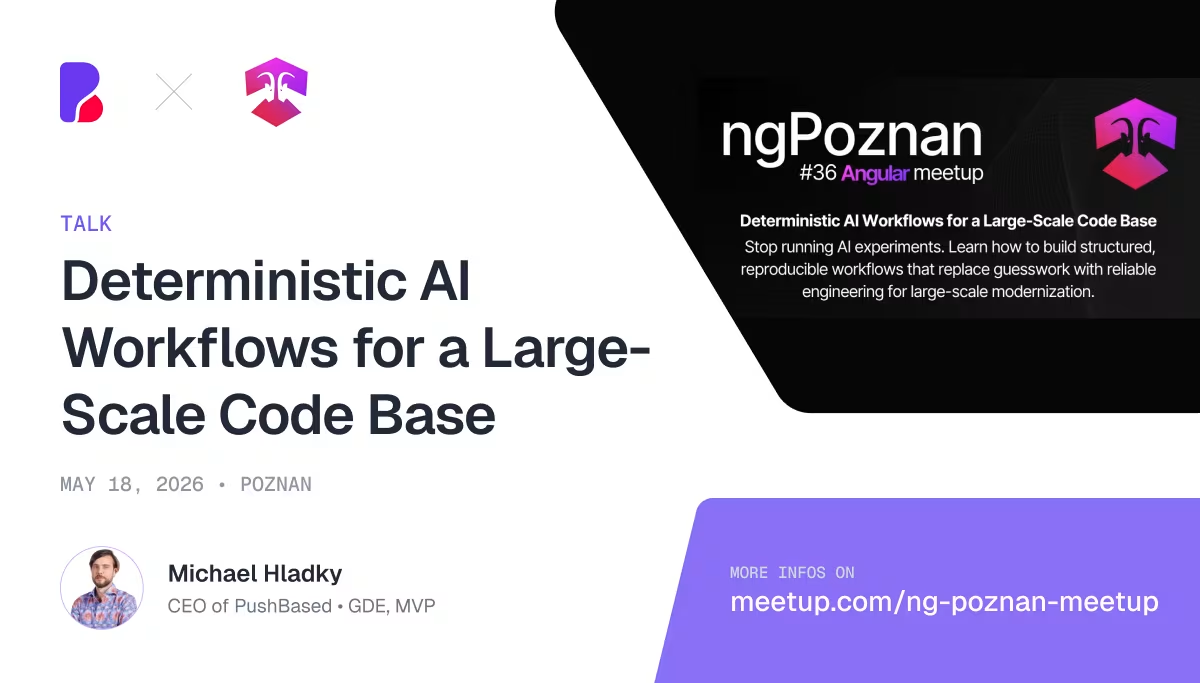
Talk
Deterministic AI Workflows for a Large-Scale Code Base | Michael Hladky @ ngPoznan

ngPoznan
May 18, 2026 · Poznan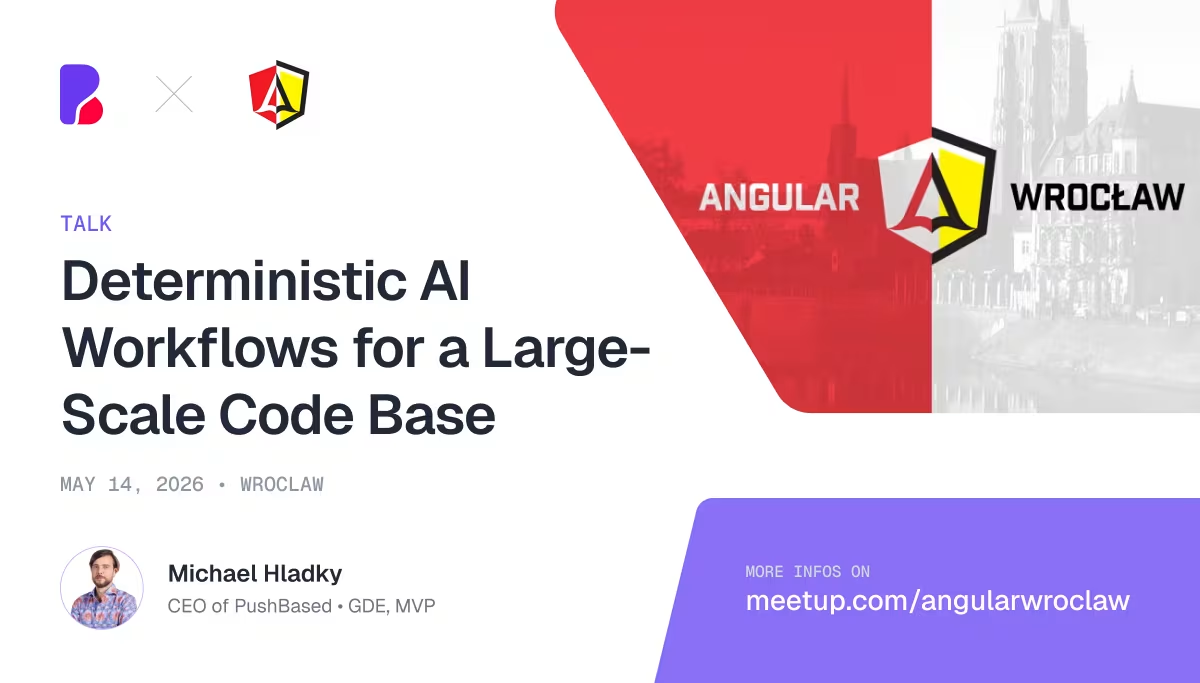
Talk
Deterministic AI Workflows for a Large-Scale Code Base | Michael Hladky @ Angular Wroclaw

Angular Wroclaw
May 14, 2026 · Wroclaw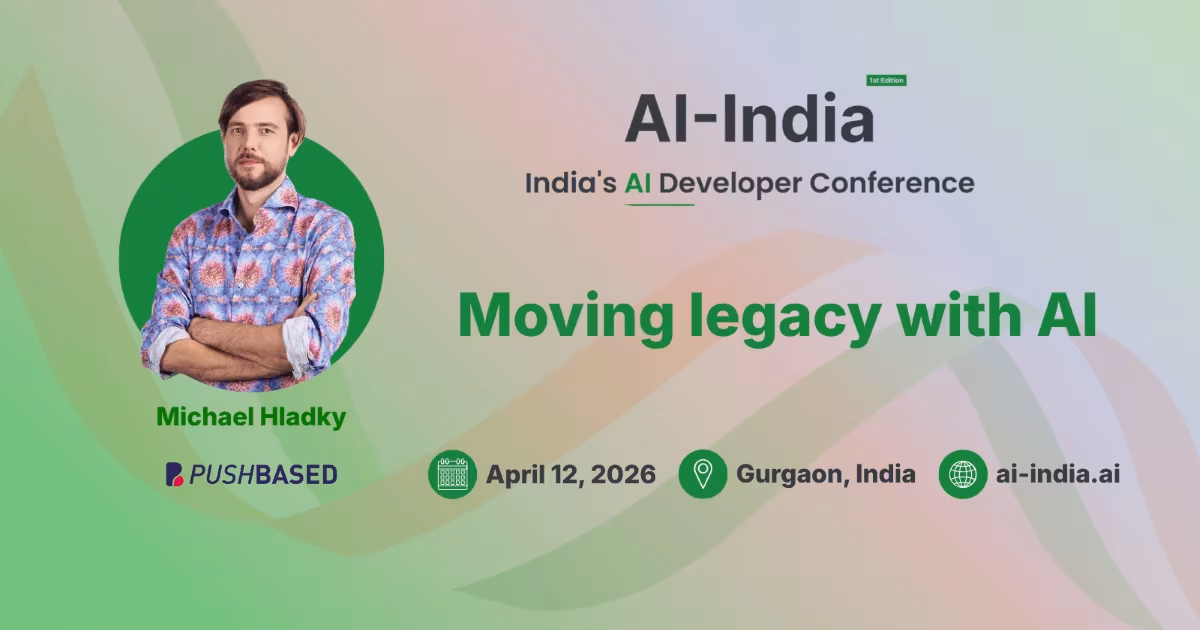
Talk
Moving legacy with AI | Michael Hladky @ AI India

AI India
Apr 12, 2026 · Gurgaon, India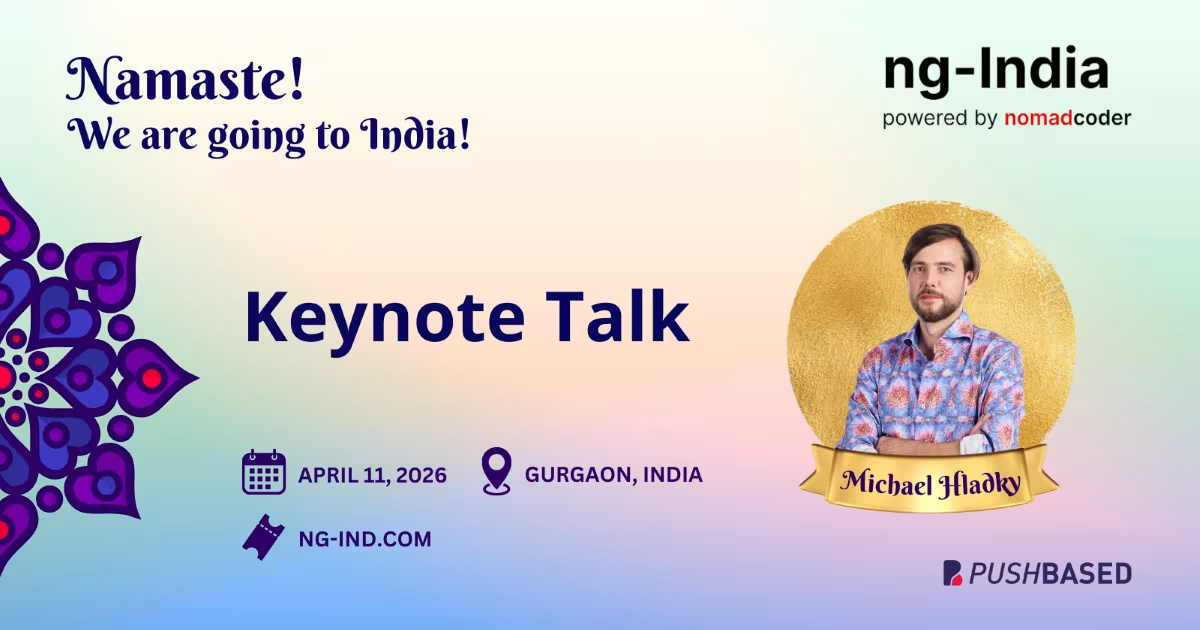
Talk
Keynote Talk | Michael Hladky @ NgIndia 2026