Talk
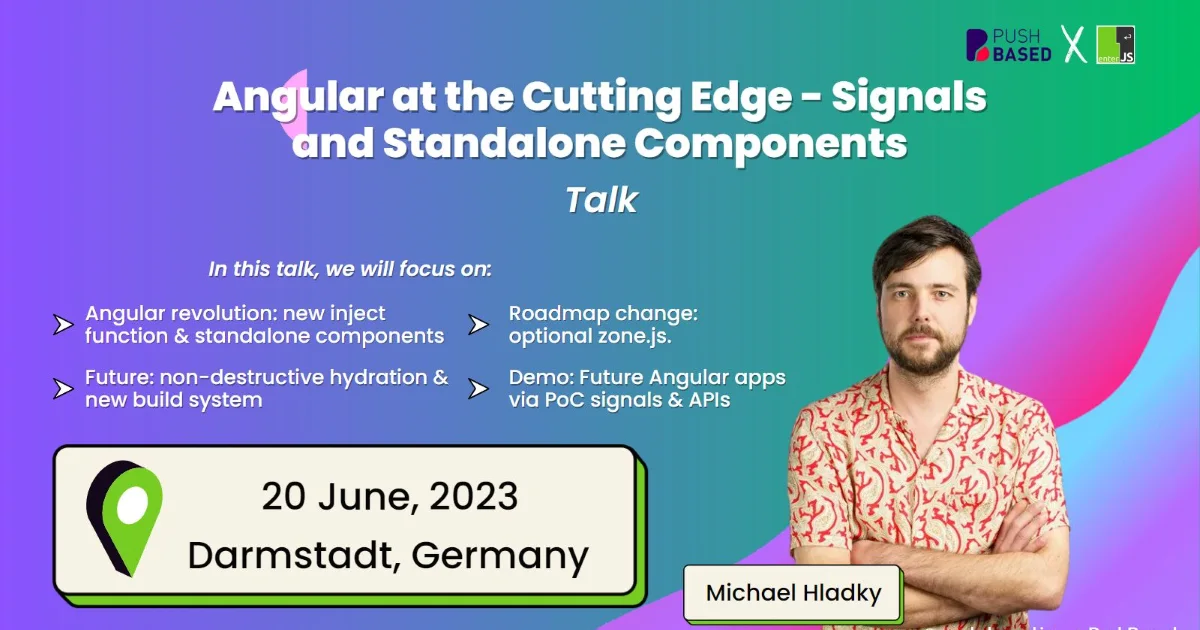
Angular at the Cutting Edge -Signals & Standalone Components

Description
The past releases of Angular claim to be just the peak of a revolution in the framework's features where a renewed inject function and standalone components pave the way. The roadmap speaks of non destructive hydration, a new build system and more.
There is one item on the roadmap which is most probably the biggest change to the framework ever done. "Making zone.js optional".
I will use the early PoC of signals and the existing standalone APIs to demonstrate how future Angular applications could look in practice. That said, this talk will demonstrate Angular applications in a new flavour, and at the cutting edge.
More from the speaker

Agentic UI Is A Frontend Architecture Problem, Not A Chat Window
The dominant picture of Agentic UI is wrong. You imagine a Copilot-style chat panel grafted onto an existing product: a sidebar that takes natural language, calls a model, and prints a reply. You ship it, call it agentic, and move on.

Advanced CPU Profiling in Node - Profile Data Structure
CPU profiles are more than flame charts—they’re structured JSON files. Learn how nodes, samples, and time deltas form the backbone of DevTools performance data.

Advanced CPU Profiling in Node - Real-Life Examples
Profiling is easiest when it's real. Learn how to capture and make sense of CPU profiles in Node.js across scripts, threads, and processes—then apply it to your own projects.

Advanced CPU Profiling in Node - Best Practices and Pitfalls
Get deeper insights into your Node.JS performance. Learn how to master advanced CPU profiling with built-in tools, interpret process/thread IDs, and optimize using sampling intervals. Troubleshooting and real examples included.

Implementing Incremental Hydration in Angular (Part 3/3)
Implement incremental hydration in a real-world Angular app - Basic setup, hydration triggers and important considerations for a seamless integration.

The Game-Changing Impact of Incremental Hydration in Angular (Part 2/3)
Let's dive deeper into why incremental hydration in Angular matters so much for performance and user experience, focusing on its influence on Largest Contentful Paint (LCP), Interaction to Next Paint (INP), and Cumulative Layout Shift (CLS).